





What is canine leak detection?
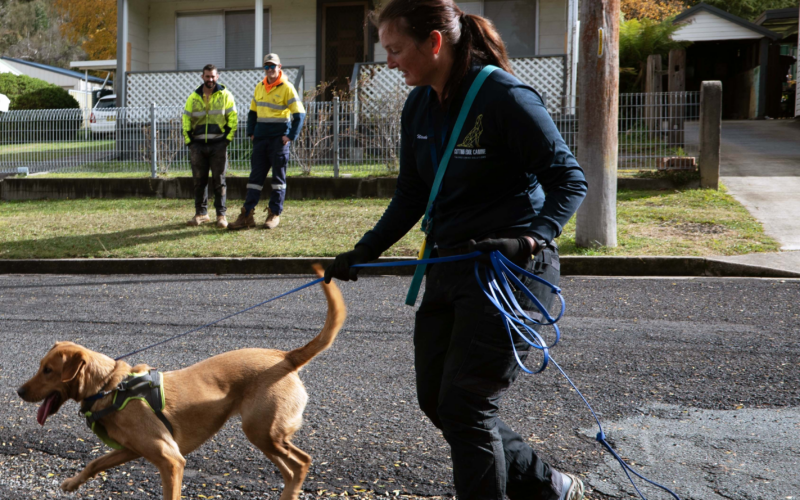
Specialised detection dogs trained to accurately locate leaks up to 2 meters below ground by detecting chlorine and fluoride in treated water. They can cover more ground and navigate varying terrain than a person, locating leaks in areas where traditional leak detection methods may be less effective or more difficult to access. Canine leak detection complements traditional leak detection methods using equipment and loggers, providing councils with additional tools to manage their water networks.
Why have we engaged Cutting Edge Canine?
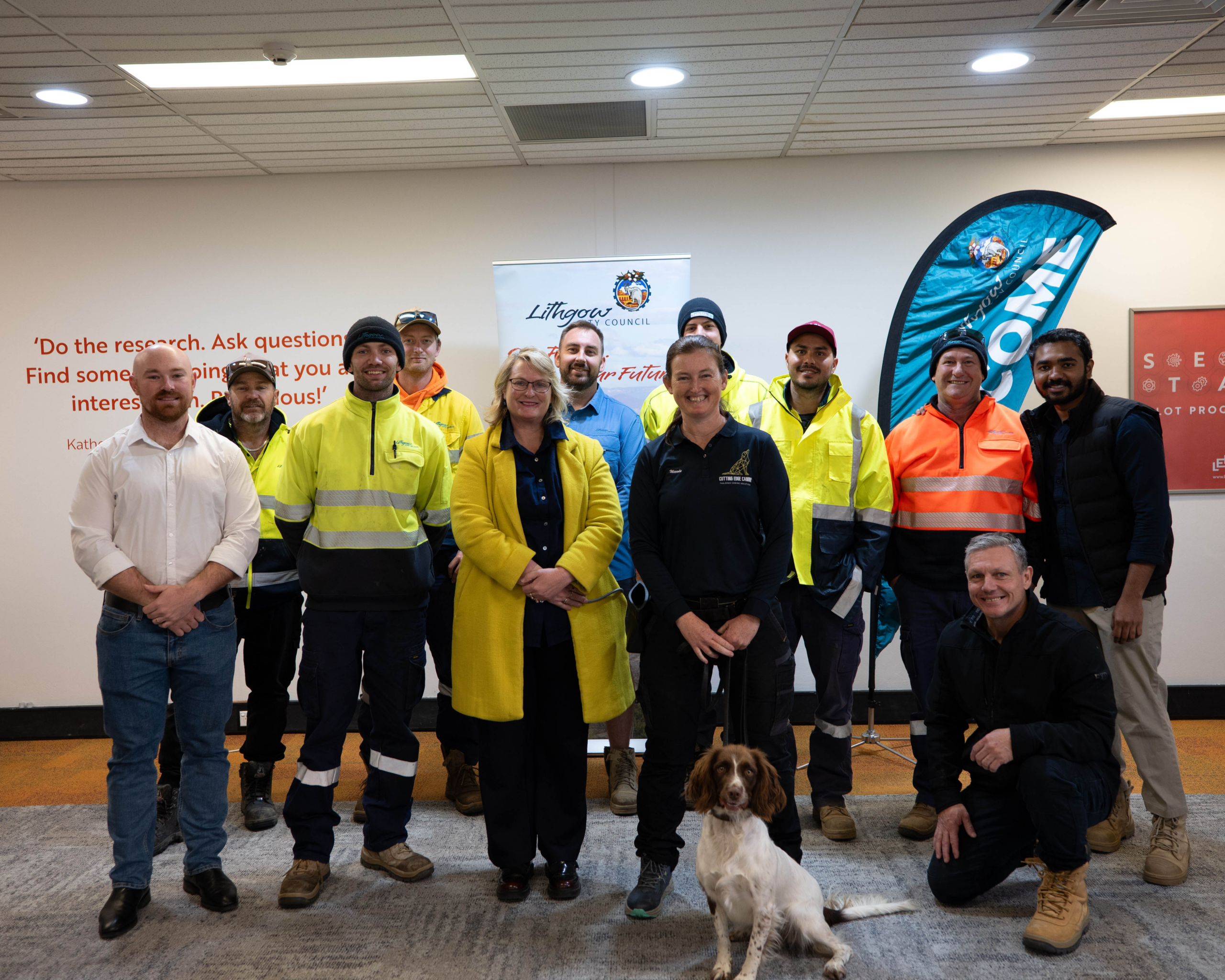
This activity has been offered to member councils of the Central NSW Joint Organisation (CNSWJO) through a project targeted at reducing water loss and improving network efficiencies in local council water networks. Nicole and her specialised dogs also present a great opportunity to engage the community in water-efficiency education.
The Water Loss Management and Efficiency Project
The regional Water Loss Management and Efficiency Hub (WLME) project, co-designed by the CNSWJO, member councils and NSW Department of Climate Change, Energy, the Environment and Water (NSW DCCEEW), is a regional collaboration that focuses on identifying and repairing leakage in water distribution systems, strengthening staff capability and enhancing network efficiency across
regional councils.
The project recently received state-wide recognition, winning the NSW Australian Water Association State Award for Organisational Excellence.
Project funding
Funding for this project is through the NSW DCCEEW Water Efficiency team. CNSWJO and member councils have been working with this team to develop and embed the WLME project since 2022.
Why does this project exist
With increasing drought risk and ageing infrastructure, the project supports improved water security and operational sustainability by embedding WLME activities into council business-as-usual operations.
Long-term benefits of the project
The WLME project promotes a sustainable future by reducing water loss and energy consumption, enhancing infrastructure resilience, and building council capacity. The regional approach fosters collaboration, knowledge sharing, and consistent practices across the region. Strengthening water security in drought-prone regions.