






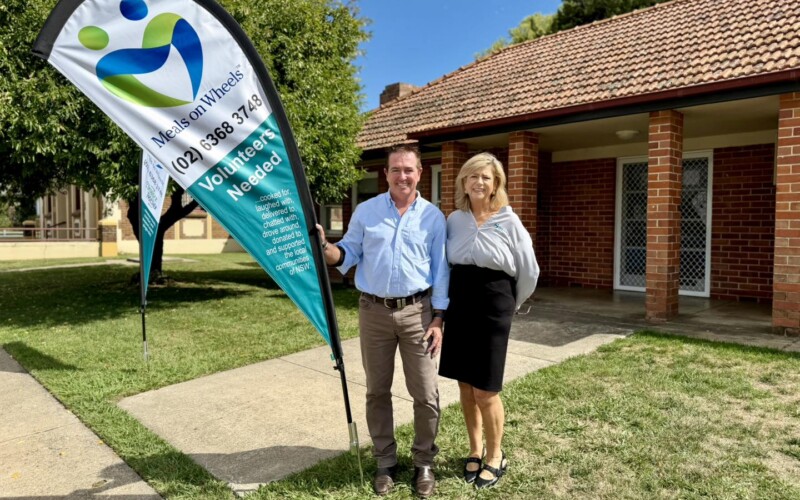
A vital community service supporting hundreds of elderly residents across the Blayney region could face an uncertain future as part of proposed Federal Government aged care reforms, with local organisers warning the changes may place the long-standing Meals on Wheels program at risk.
Blayney Meals on Wheels Service Manager Leeanne Wright recently travelled to Canberra to present evidence before the Senate Community Affairs Committee, advocating strongly for the preservation of the Commonwealth Home Support Program (CHSP), which currently subsidises the delivery of meals to older Australians living independently in their own homes.
Under the proposed reforms, the CHSP program is set to transition to the new Support at Home model from July 1, 2027. While the broader reform is designed to streamline aged care services nationally, local providers are concerned that the move from block-funded support to a fee-based, means-tested system could make services unaffordable for many vulnerable clients.
Blayney Meals on Wheels currently delivers more than 7,000 meals each year to over 200 clients across an expansive 16,000 square kilometre region. Thanks to the CHSP subsidy, clients are able to receive a two-course meal for between $10 and $12.
Ms Wright said the proposed changes could dramatically alter the affordability of the service.
“The situation is serious. The potential loss of Commonwealth Home Support Program block funding poses a direct threat to the viability of our service and to the well-being of our community,” Ms Wright said.
“Meals on Wheels has operated in Australia since 1956, and this is the biggest risk to closing our doors we have ever faced.”
Local Member for Bathurst, Paul Toole, has also raised concerns about the impact the changes could have on regional communities.
“Blayney Meals on Wheels provides an essential service to elderly and vulnerable residents who rely on the program not only for nutritious meals but also for regular social contact and welfare checks,” Mr Toole said.
“For many people, Meals on Wheels is more than just food delivery. The weekly visit from a friendly volunteer provides vital social connection and reassurance that someone is looking out for them.”
Mr Toole warned that if funding support is removed, the cost of a single meal could rise dramatically, potentially reaching as much as $70, making the service unaffordable for many who rely on it.
“The consequences would extend far beyond individual households,” he said. “Without access to affordable meals and regular welfare checks, increased pressure would inevitably fall on the health system and aged care providers.”
Ms Wright said the organisation remains committed to advocating for the service and the people who depend on it, urging the government to reconsider the changes and work closely with providers to ensure programs like Meals on Wheels remain viable in regional communities.
“We simply cannot lose Meals on Wheels,” she said. “For many of our clients, it’s not just a meal, it’s independence, dignity and connection.”