



It began with a quiet revolution. Some 140 million years ago, in the shadow of the dinosaurs, the first flowering plants unfurled their petals for the very first time. It was among the dominant non-flowering plants of the time, pines, ferns, mosses, but from this modest beginning has sprung one of the greatest success stories the natural world has ever told. Today, the descendants of those first flowers number more than 350,000 species worldwide, and in this one island continent alone, some 20,000 species bloom, from the golden wattle of the highlands to the scarlet waratahs of the coast.
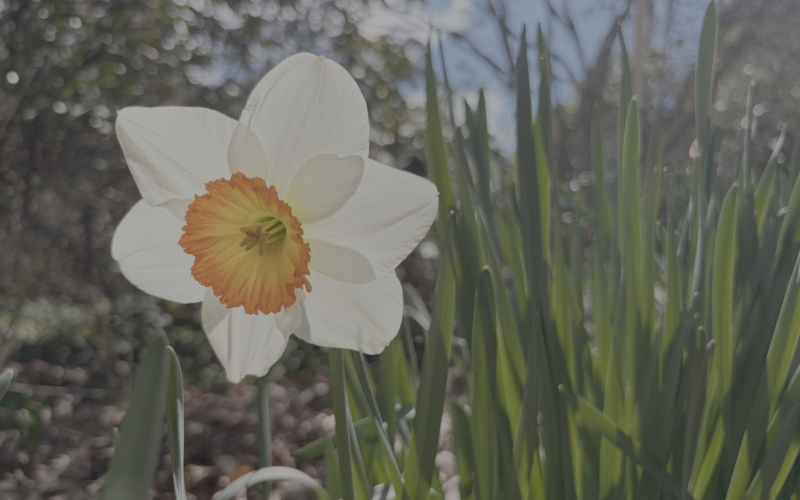
And yet, for all this staggering diversity: all the colours, the scents, the impossible shapes that flowers have evolved to seduce a passing bee, moth, bat or bird; there is, hidden in plain sight, something remarkably consistent. Count the petals of a daffodil. Then a wild dandelion. Then a hibiscus, a daisy, an apple blossom. Again and again, you will find the same small set of numbers turning up: three, five, eight, thirteen. It is not coincidence. It is mathematics, written into the very growing tip of the plant.
As a flower forms, its petals emerge one after another from a tiny cluster of cells, each new petal rotating from the last by a precise and unchanging angle – roughly 137.5 degrees. This is the so-called golden angle, and it happens to be the single most efficient way to pack new growth around a stem without any petal ever quite shading the one before it. Apply that angle again and again, and the numbers that fall out are not random at all. They are the Fibonacci sequence, which is the same sequence that spirals through pinecones, sunflower heads, and the chambers of a nautilus shell.
This is why when you wander through a forest or a field of wildflowers, you are (whether you know it or not) walking through a living proof. A humble petal count is, in its own quiet way, a glimpse of the same order that governs galaxies and tides.
And perhaps that is the real lesson tucked inside every flower. In a world so ready to argue over what is true, nature offers a rather stubborn reminder: some things simply are. A flower does not hold an opinion about the golden angle. It does not debate mathematics. It simply grows, generation after generation, in obedience to a pattern laid down long before there were minds around to notice it. The universe, it turns out, keeps a few secrets in plain sight. And every spring, in gardens and roadsides everywhere, it tells us one of them again.
Ashley Bland is the chairman of Greening Bathurst.