




By Central West Village Voice Editorial Team
For generations, the Central West has helped keep the lights on in New South Wales, now the region is standing at another turning point.
Coal mining towns in the Central West were built on energy production. Families here worked in the mines, at the power stations, on the railways and in the industries that supported them. It wasn’t just jobs, it became part of our identity.
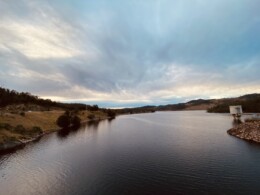
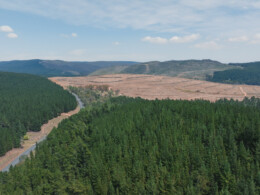
Across the Central West, a new wave of energy projects is either being proposed or already moving through planning. Projects like the proposed Mount Lambie Wind Farm from Alinta Energy, Someva Renewables’s Sunny Corner Wind Farm, the battery projects linked to Mount Piper and the Great Western Battery, the Lake Lyell Pumped Hydro proposal and wind developments around Oberon are all part of a much bigger shift happening across Australia.
Understandably, people have concerns. Some residents are worried about visual impacts, others are worried about noise, environmental issues, transmission lines, changing landscapes or what this all means for rural communities long term. Those concerns are real and they deserve to be taken seriously, not dismissed.
But at the same time, there’s also a lot of fear floating around that simply isn’t based on facts.
Social media has become full of claims that every renewable project is going to destroy communities, ruin farming or somehow collapse the power grid entirely. The truth, as usual, is probably somewhere in the middle.
What we should be doing as a region is having a mature conversation about what these projects actually mean, what the impacts are, what the benefits are, and how communities can genuinely have a say in shaping them.
Because whether people like it or not, the world’s energy systems are changing.
The bigger question for the Central West is whether we want to be part of that future economically, or whether we sit on the sidelines while investment, jobs and new industries go elsewhere.
That’s the part of the conversation that often gets lost.
Reliable and abundant power has always attracted industry. That was true in the coal era and it’s still true now. Around the world, major companies are looking for regions with strong energy infrastructure and long-term power certainty. Hyperscale data centres, technology businesses, AI infrastructure, advanced manufacturing, food processing and cold storage all require enormous amounts of reliable electricity.
These industries also create jobs that don’t disappear overnight.
The Central West is actually well placed to benefit if we get this right. We already have transmission infrastructure, an energy-skilled workforce, available land and proximity to Sydney and the future Western Sydney Airport. We understand heavy industry because we’ve lived it for generations.
There’s a real opportunity here for the region to evolve from simply producing energy to becoming a place where new industries are built because of energy.
That doesn’t mean every project should automatically get a free pass. Far from it.
Companies need to do a much better job bringing communities along for the journey. Too often people feel like projects are announced first and explained later. Consultation can feel corporate, overly technical and disconnected from local concerns.
If companies want trust, they need to earn it.
That means being upfront about impacts. It means explaining things in plain English. It means genuinely listening when communities raise concerns about biodiversity, visual impacts or infrastructure pressure. And it means ensuring regional communities see real long-term benefits, not just temporary construction jobs.
At the same time, communities also need access to balanced information, not just fear campaigns designed to inflame emotions.
We don’t need to agree on every project. Healthy debate is important. But we should at least be willing to properly understand what’s being proposed before making up our minds.
The Central West has powered this state for more than a century. Energy is part of who we are. The transition happening now doesn’t erase that history. In many ways, it builds on it.
The real challenge is making sure regional communities are partners in that future, not an afterthought.